
Mexico
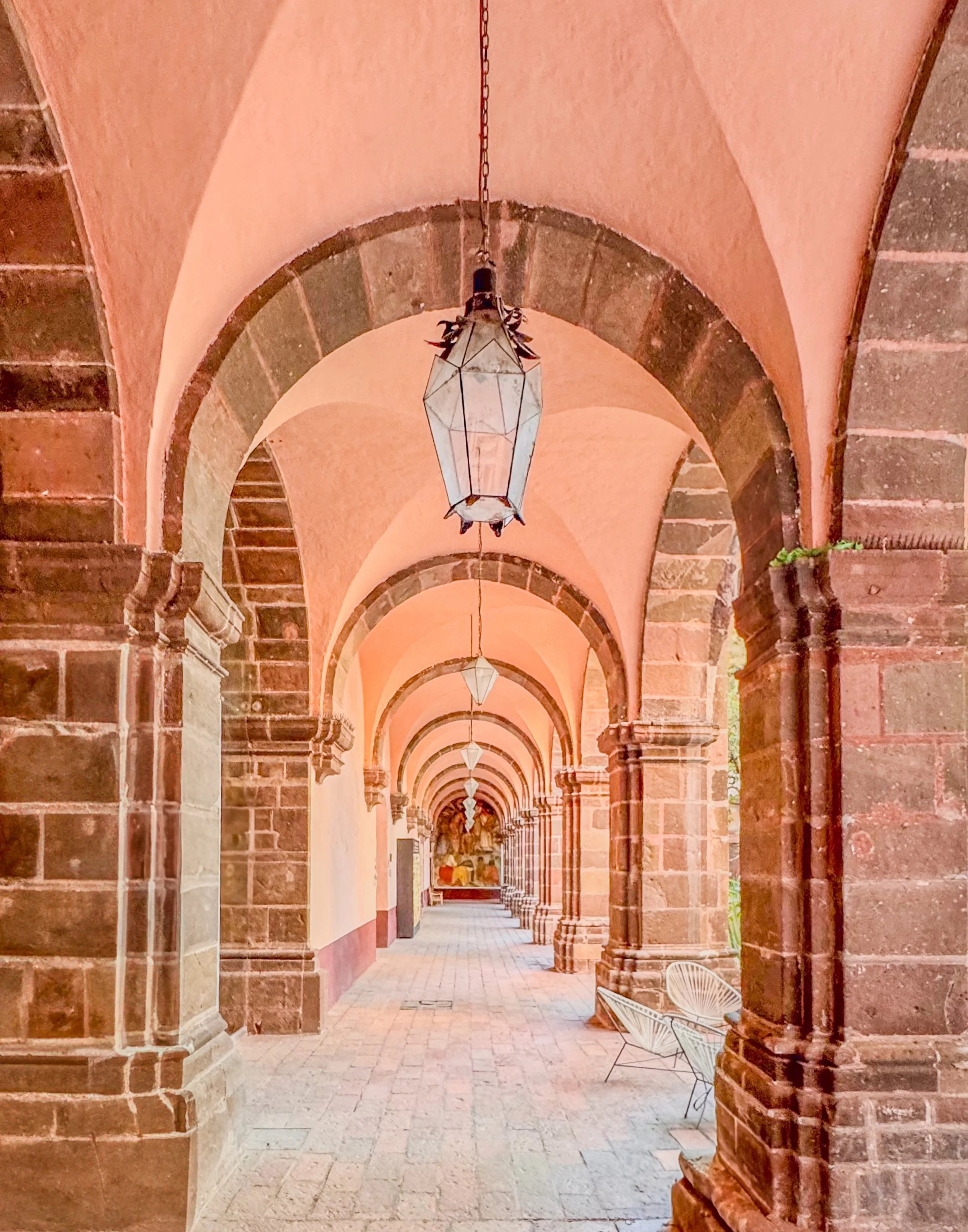
A rhythmic study of colonial geometry within the corridors of Bellas Artes. This image captures the vanishing point created by a long succession of heavy stone arches and suspended lanterns, leading the eye toward a distant mural. It highlights the architectural elegance of the former cloisters, where the repetition of form and the soft glow of the vaulted ceiling create a sense of infinite, tranquil space.
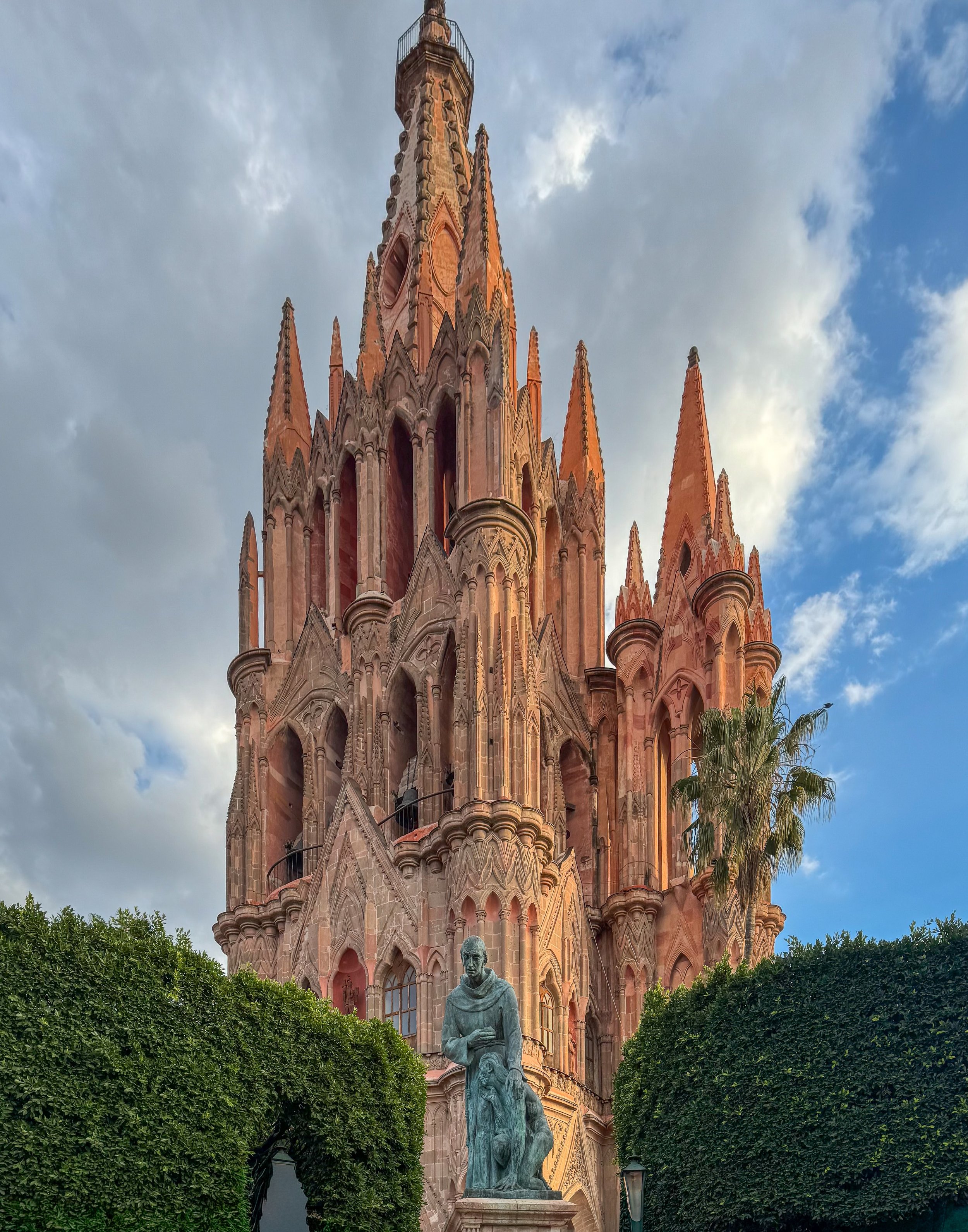
The Parroquia de San Miguel Arcángel is not just a place of worship; it is the visual and spiritual anchor of San Miguel de Allende. The Church is constructed from a local volcanic stone called pink cantera which glows during the “Amber Hour”. Its significance lies in its unique history, its defiant architecture, and its role as a symbol of Mexican identity.
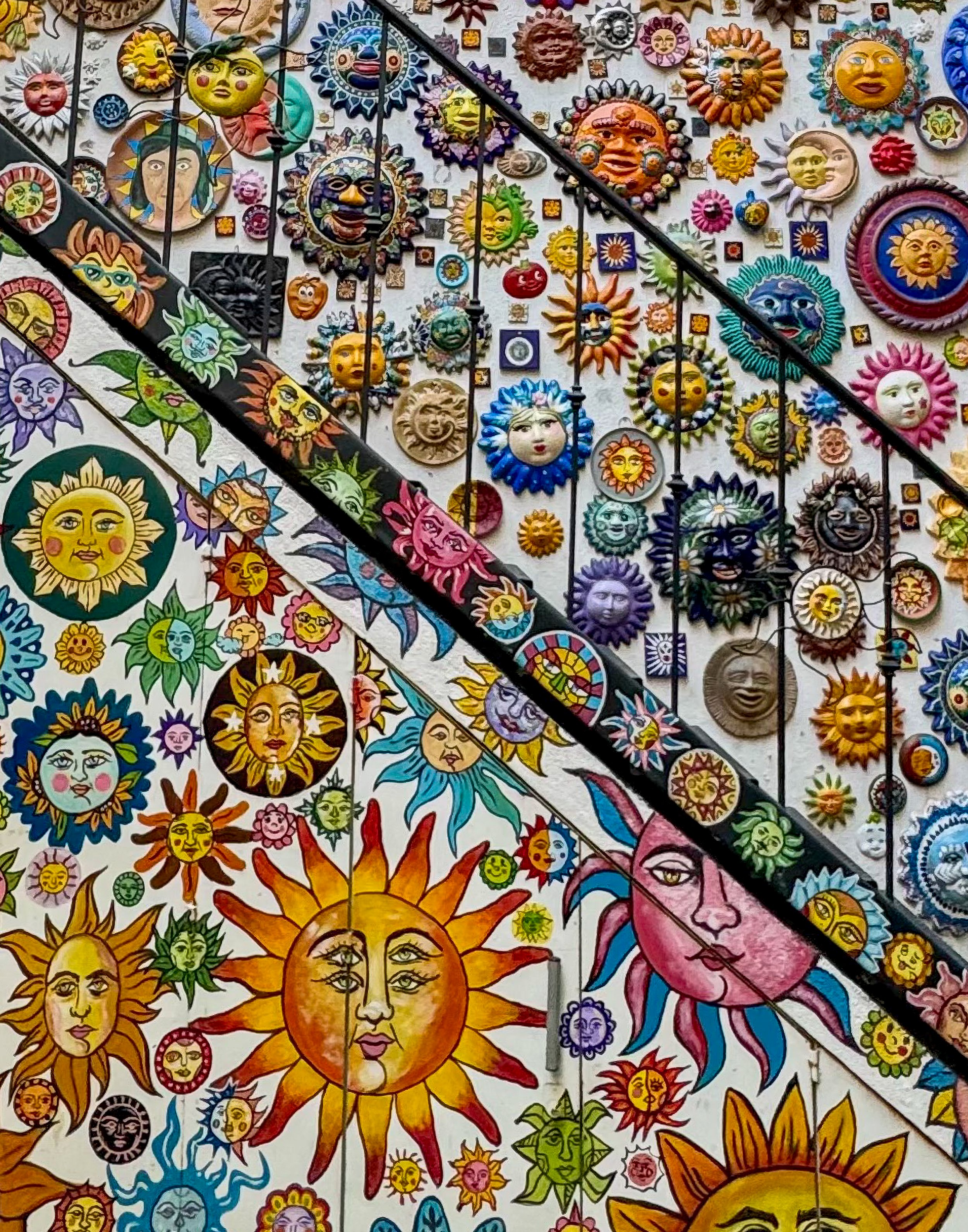
A kaleidoscopic display of folk art from the iconic Casa de los Soles. This image captures an interior staircase transformed into a vibrant mural of unique handcrafted. It is a celebration of the artisan spirit and the solar energy that radiates through the homes and hearts of San Miguel de Allende.
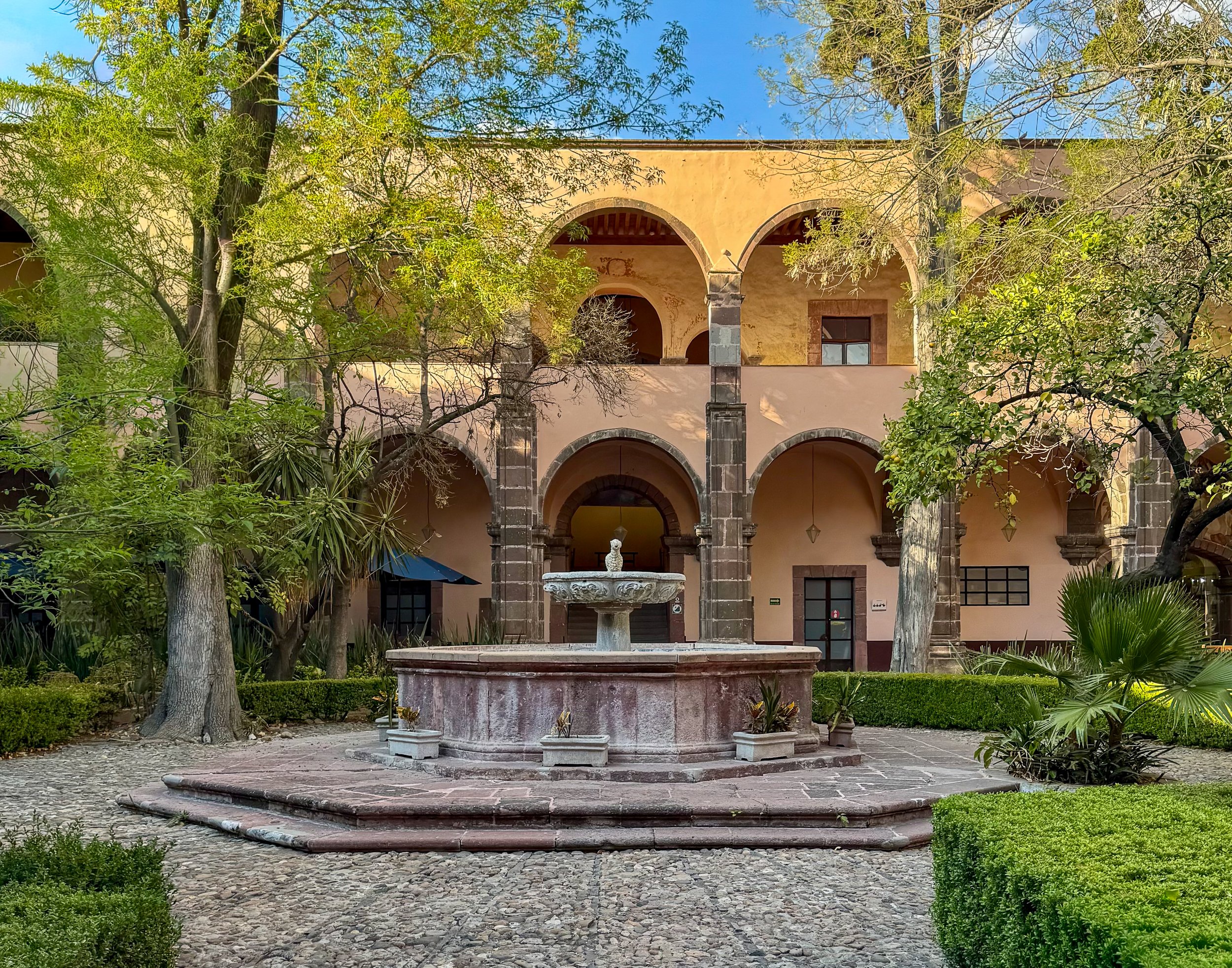
A classic Spanish colonial courtyard featuring a central stone fountain surrounded by shaded arches. Originally the cloisters of the Convent of Las Monjas, this hidden sanctuary was designed to shield its inhabitants from the outside world. Today, the buildings surrounding the courtyard serves as a national art center and school called Centro Cultural Ignacio Ramírez El Nigromante, also known as Bellas Artes.
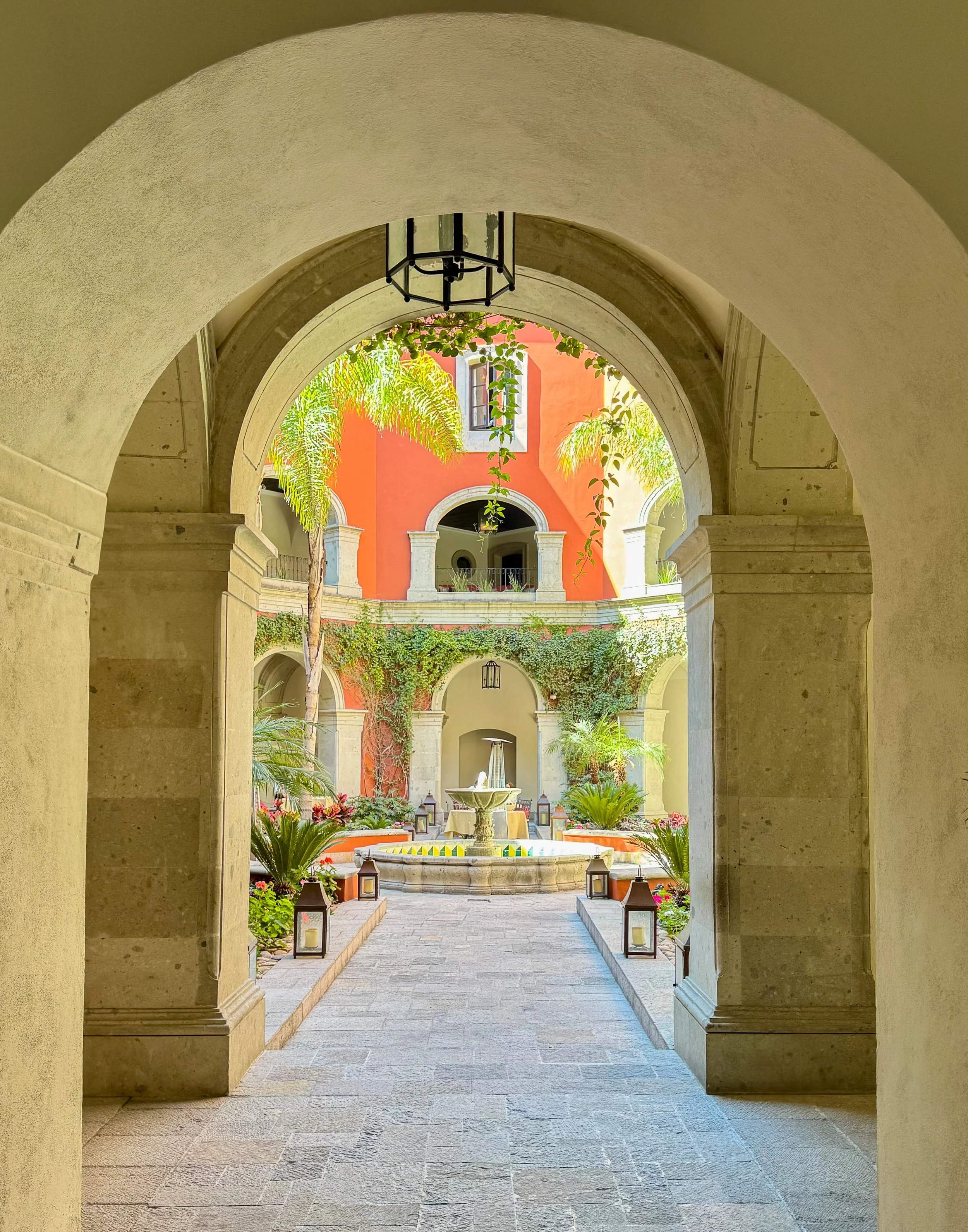
A framed perspective of the central courtyard at the Rosewood San Miguel de Allende. This image highlights the modern hacienda architecture, where soaring stone arches and hand-carved details meet lush, manicured gardens. The composition captures the quiet elegance of the inner sanctuary, reflecting the town's colonial charm through warm terracotta tones and tranquil, sun-drenched colonnades.
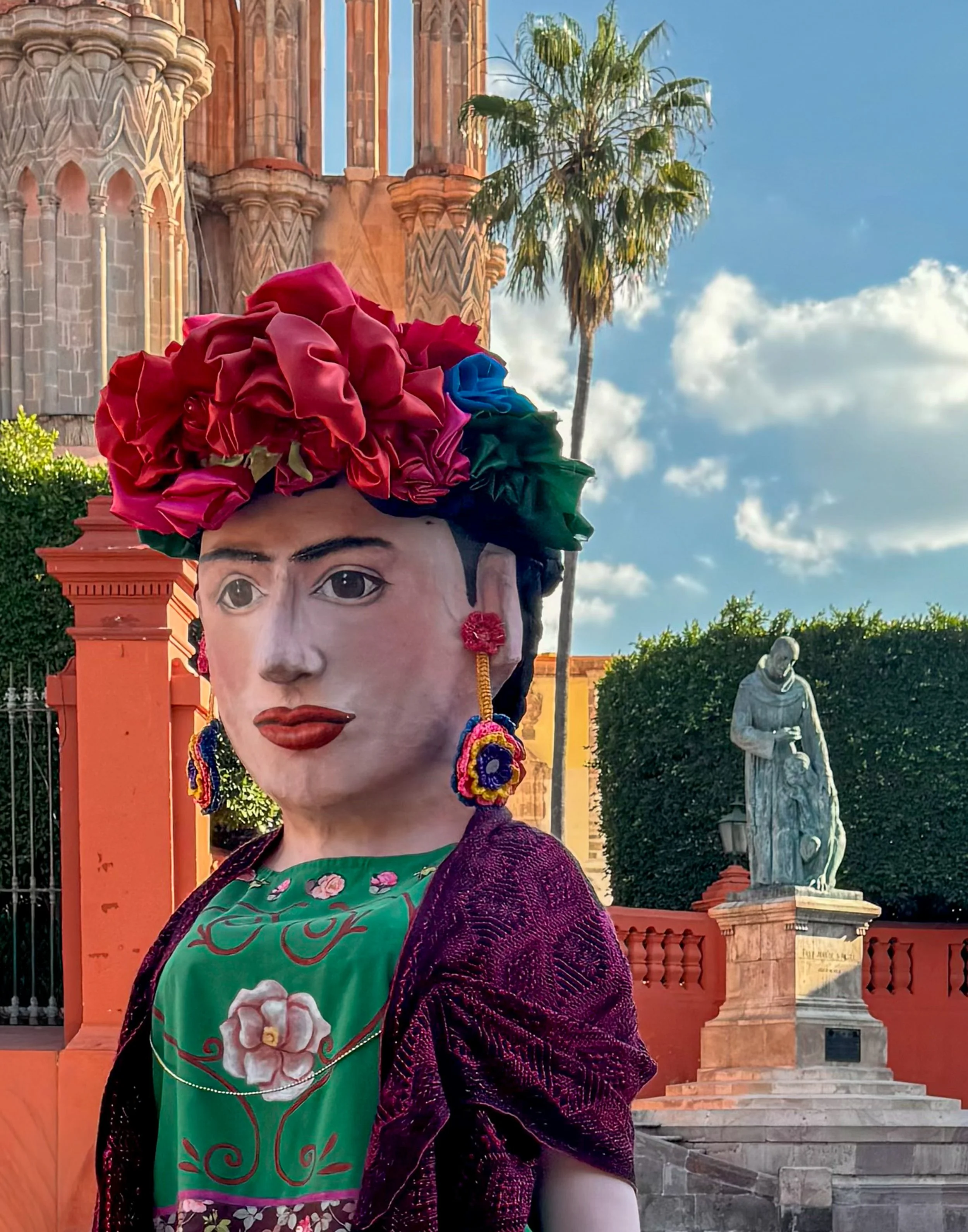
Whether depicting a bride, a revolutionary, or a whimsical character, the mojiganga brings a surreal joy to the city's plazas, serving as a larger-than-life bridge between the community and its festivals. This image celebrates Frida Kahlo as the patron saint of San Miguel’s creative soul.
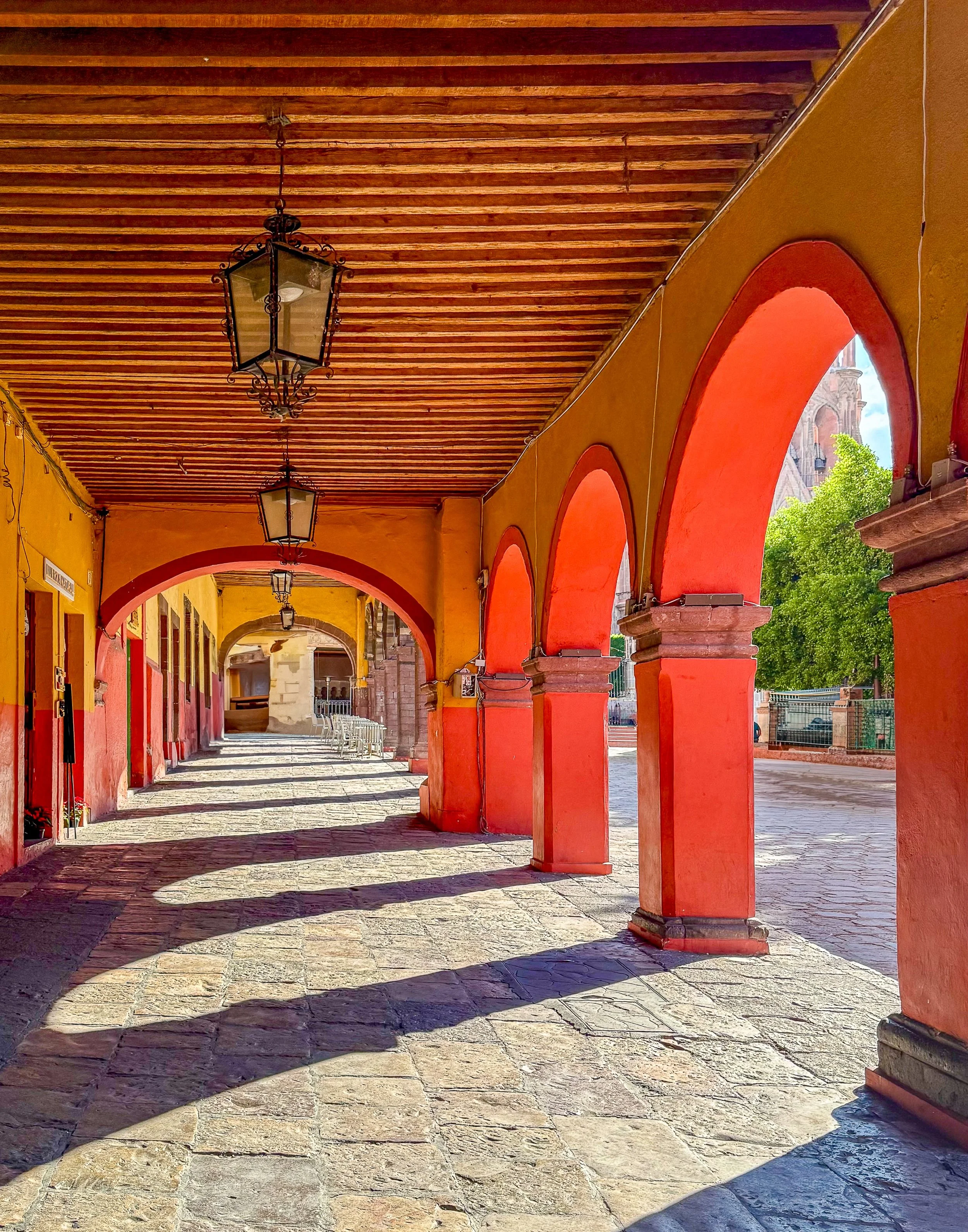
This image highlights the rhythmic succession of vibrant orange arches and heavy timber ceilings along the central plaza portals that define San Miguel’s public walkways. By capturing the dramatic, elongated shadows cast by the sun, the photograph emphasizes the ever changing interplay of light and geometry.
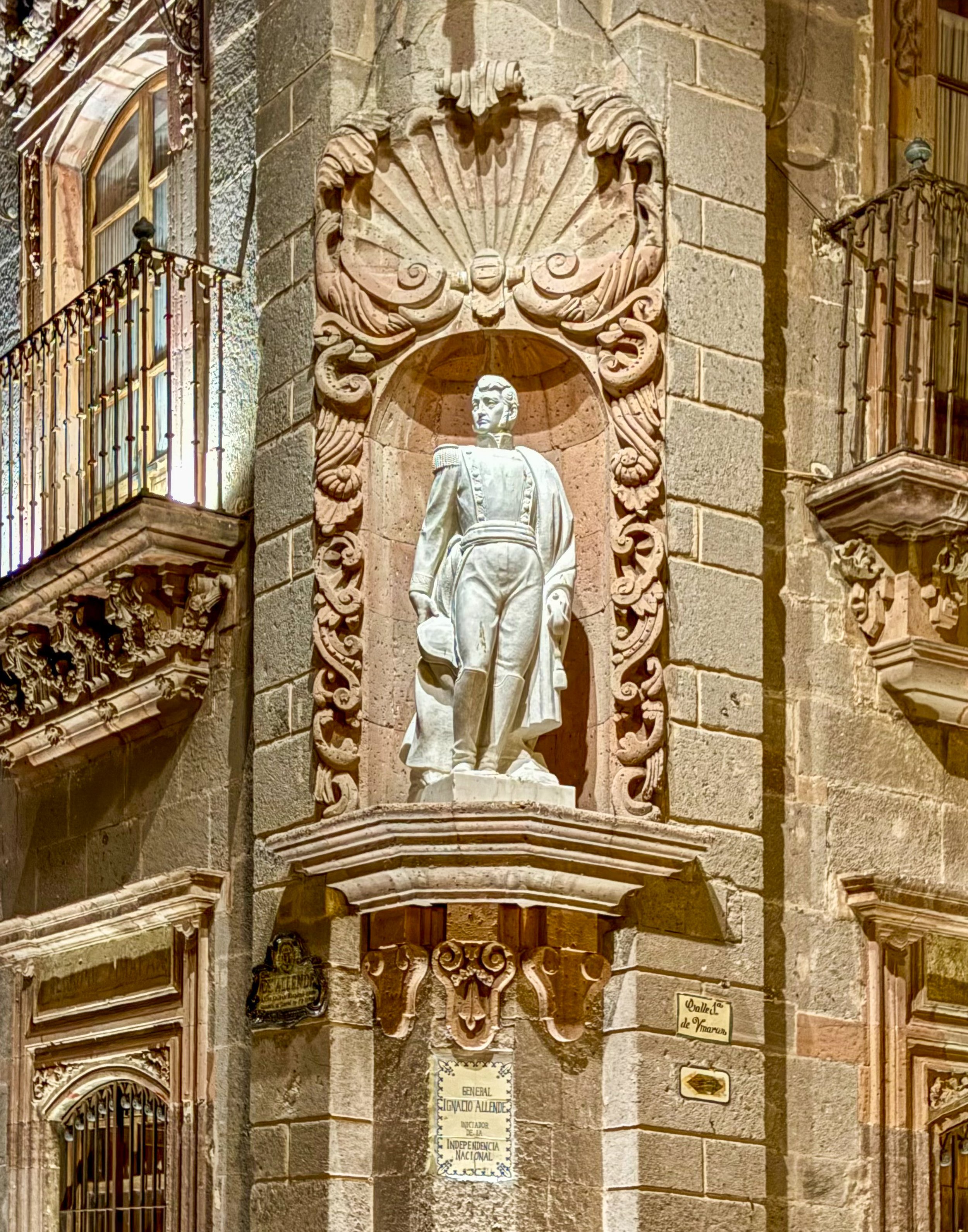
The statue of Ignacio Allende, the city’s namesake and hero of the Mexican War of Independence, stands watch from an intricately carved corner alcove. The image emphasizes the exquisite Baroque craftsmanship of the stone "shell" canopy and the rhythmic patterns of the surrounding masonry. By isolating this figure against the warm tones of the colonial architecture, this image connects the city's modern-day vibrancy to the stoic figures of its revolutionary past.
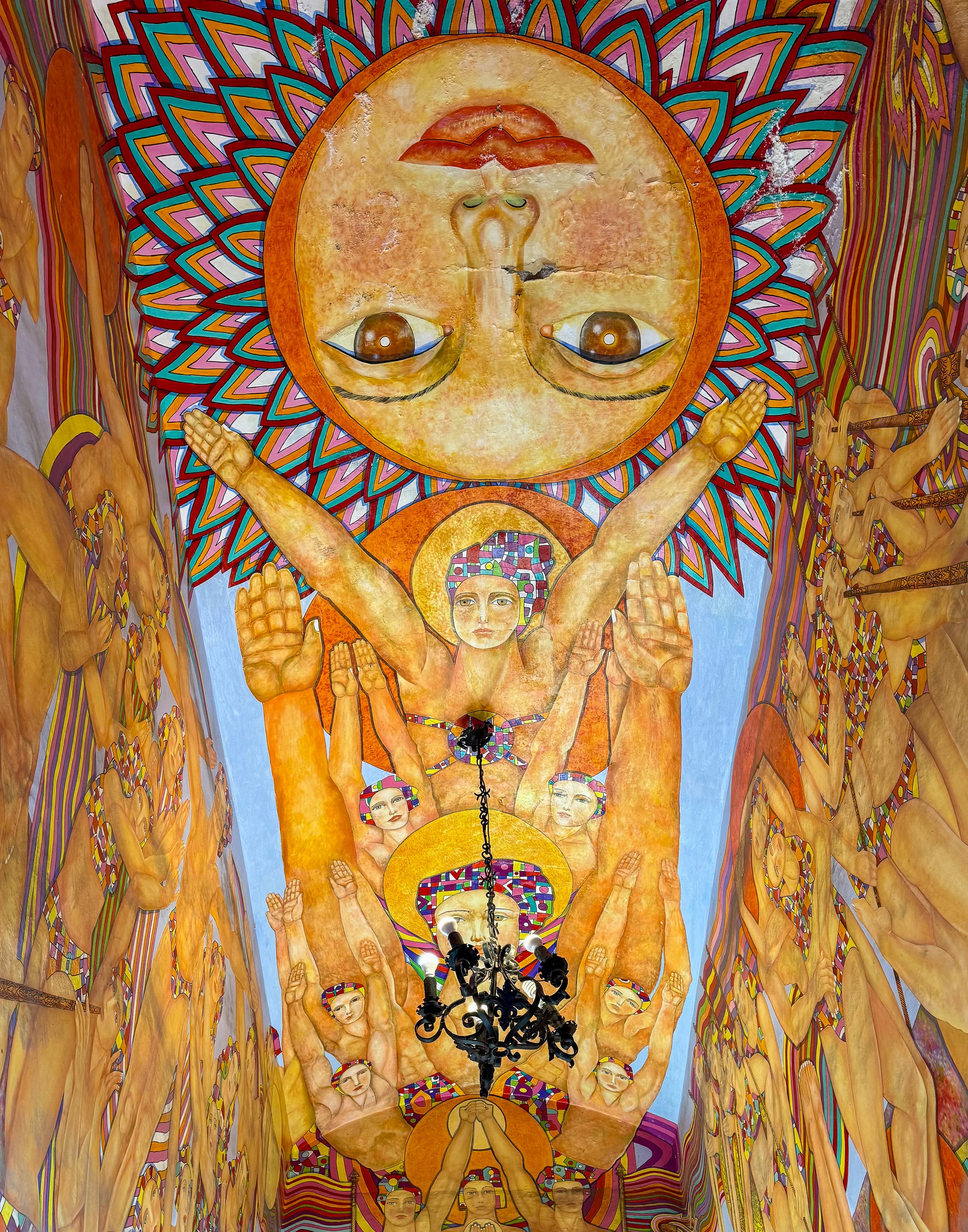
This perspective of a vibrant ceiling mural at the Instituto Allende highlights the radiant sun overlooking a procession of figures, a symbol of the creative and revolutionary energy of Mexican history. Its bold use of color and motion breathes modern life into the 18th-century architecture, celebrating the city's enduring artistic legacy.
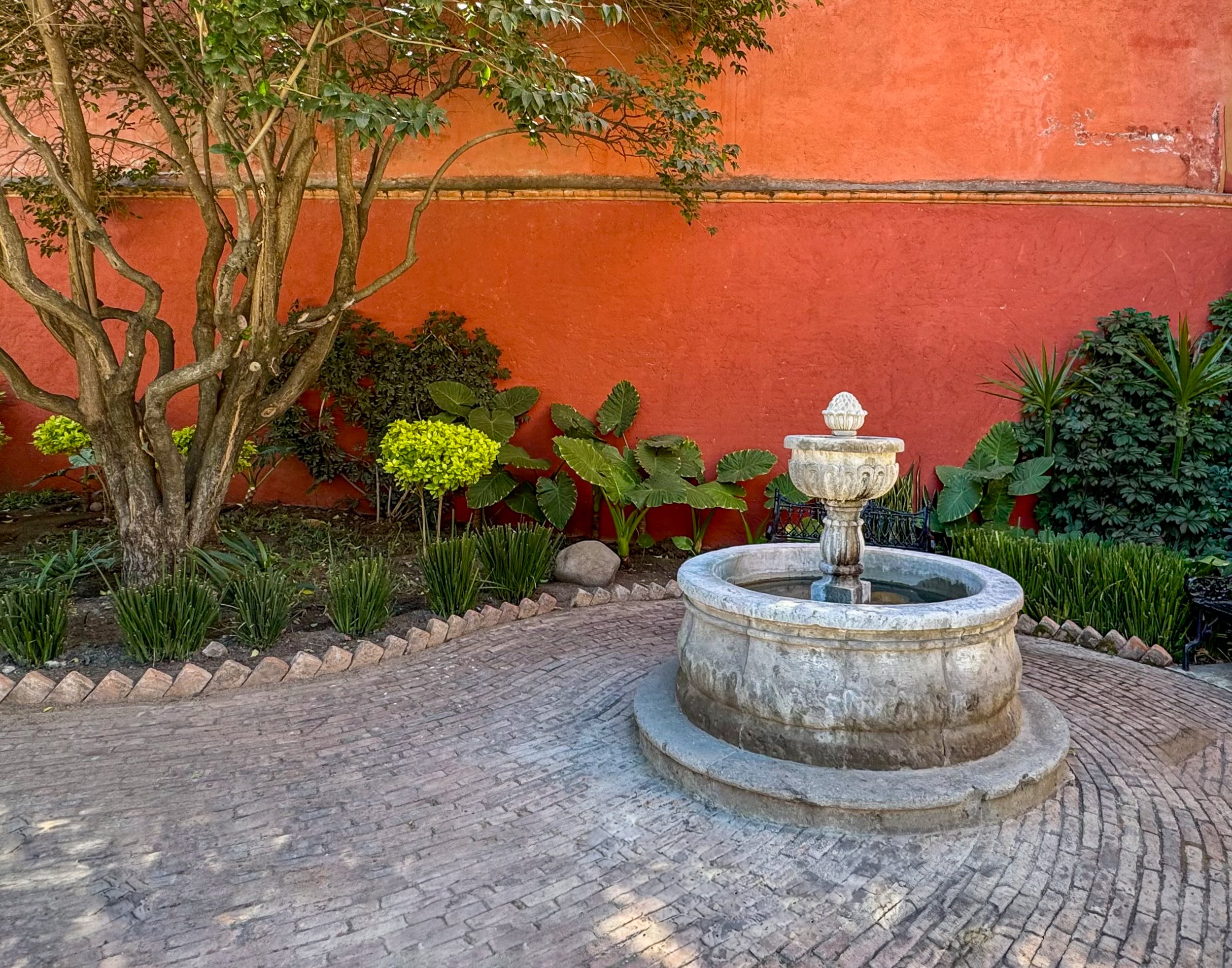
A quiet corner just outside the Rosewood San Miguel de Allende, featuring a tiered stone fountain topped with a carved pineapple—the traditional symbol of hospitality. This image showcases the interplay of vibrant terracotta walls and lush greenery. The weathered stone and circular brick paving capture the rustic, elegant charm of the landscape.
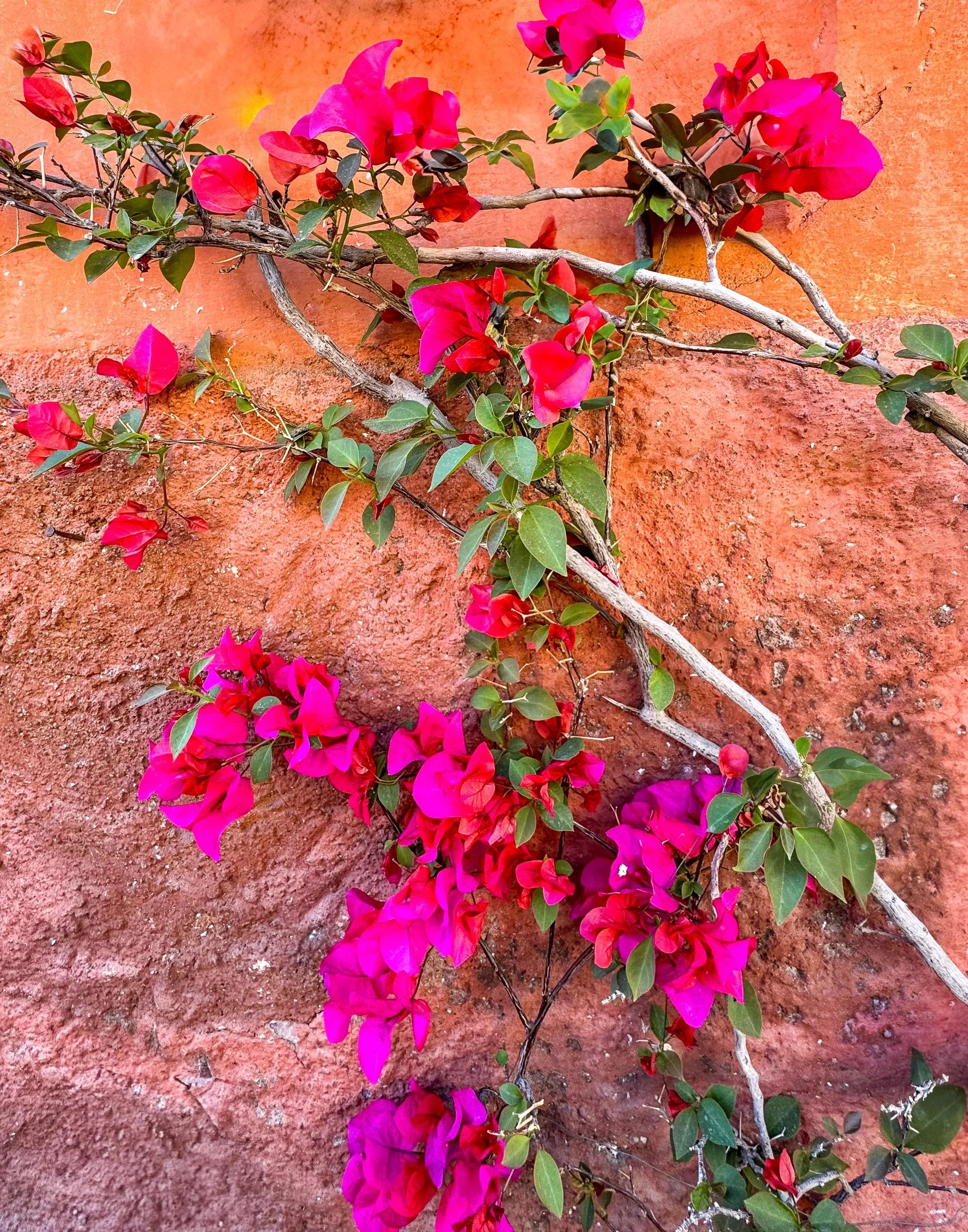
A vivid study of fuchsia bougainvillea climbing a weathered terracotta wall in the heart of San Miguel. This image captures the iconic color palette of the high desert, where organic growth meets the city’s historic masonry. The striking contrast between the delicate, paper-like petals and the rugged stone texture reflects the rugged, enduring beauty found in the city’s quietest corners.
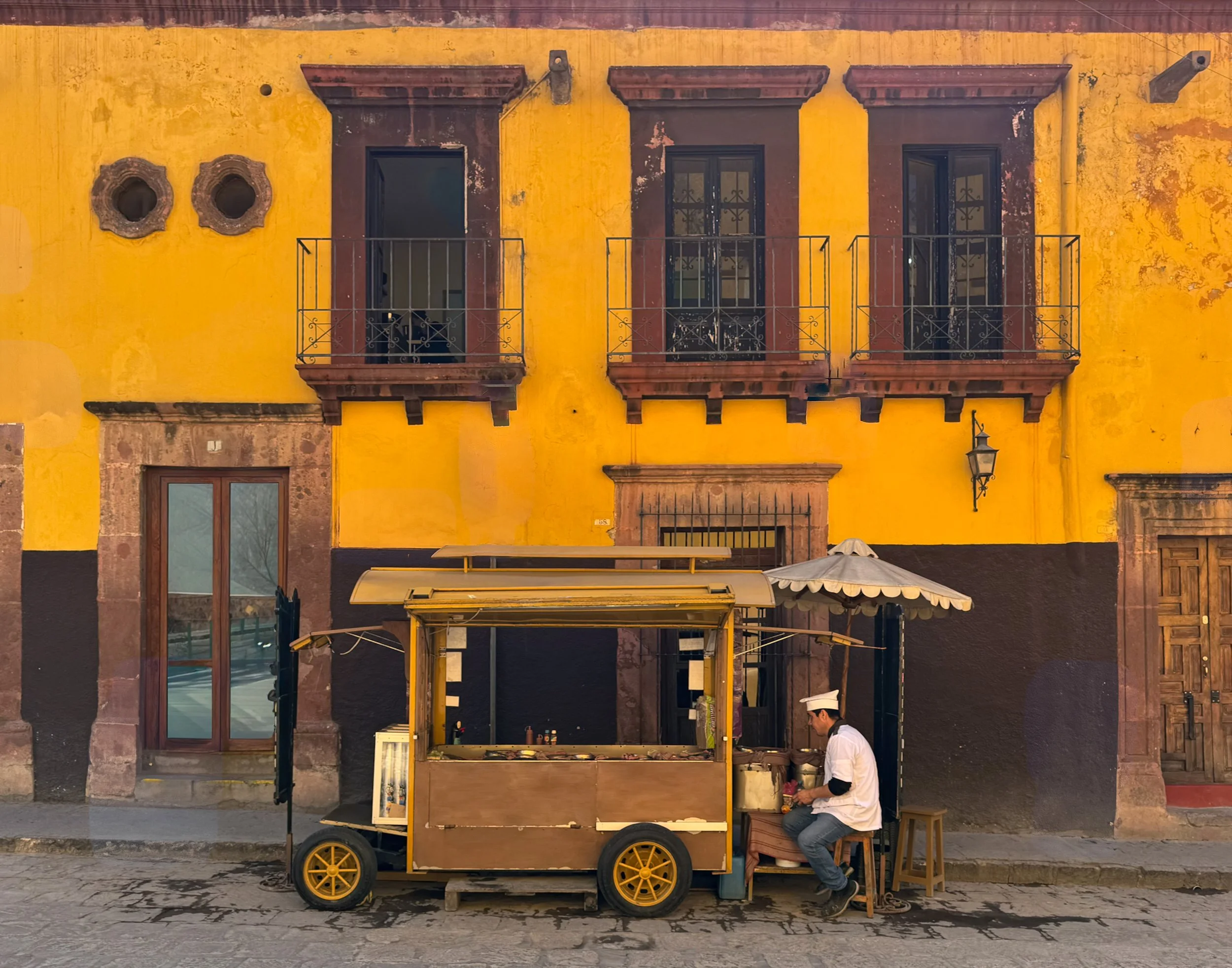
A study of daily rhythm and colonial color. This image captures a street vendor preparing his cart against a vibrant, bi-color ocher wall, where the high-altitude morning sun creates sharp, geometric shadows. It is a moment of quiet industry, framing the intersection of San Miguel’s historic architecture and the living, breathing commerce of its streets.